
The Diplomacy Class Steve Witkoff Should Take
It offers a rare opportunity to train like a professional diplomat under the guidance of career ambassadors.

I’ve worried for years about the diplomatic malpractice I’ve witnessed at the highest levels of government — both in the United States and abroad. That incompetence, I believe, is one of the main reasons for the current state of the world.
The reality is that too many amateurs act as diplomats. They are political appointees with little or no relevant qualifications, yet they undergo no training at all. Both they and their bosses seem to think that diplomacy is fairly straightforward and requires no special skills. The pitiful results they produce have done little to disabuse them of that misguided notion.
But that’s not the only problem. Even those who become professional diplomats spend years learning what exactly their job entails and how to do it well. That’s because colleges and universities don’t prepare students — not even those studying international relations — for the practical work of diplomacy. Even when new officers join the State Department or a ministry of foreign affairs, they don’t receive the proper tradecraft training needed to perform effectively from the outset.
Taking stock of this reality a decade ago, I concluded that students and aspiring diplomats should have an opportunity to understand the various aspects of the profession as they are actually practiced. There should be a place where they can experience diplomacy in an immersive setting and learn essential skills from seasoned practitioners, not academics.
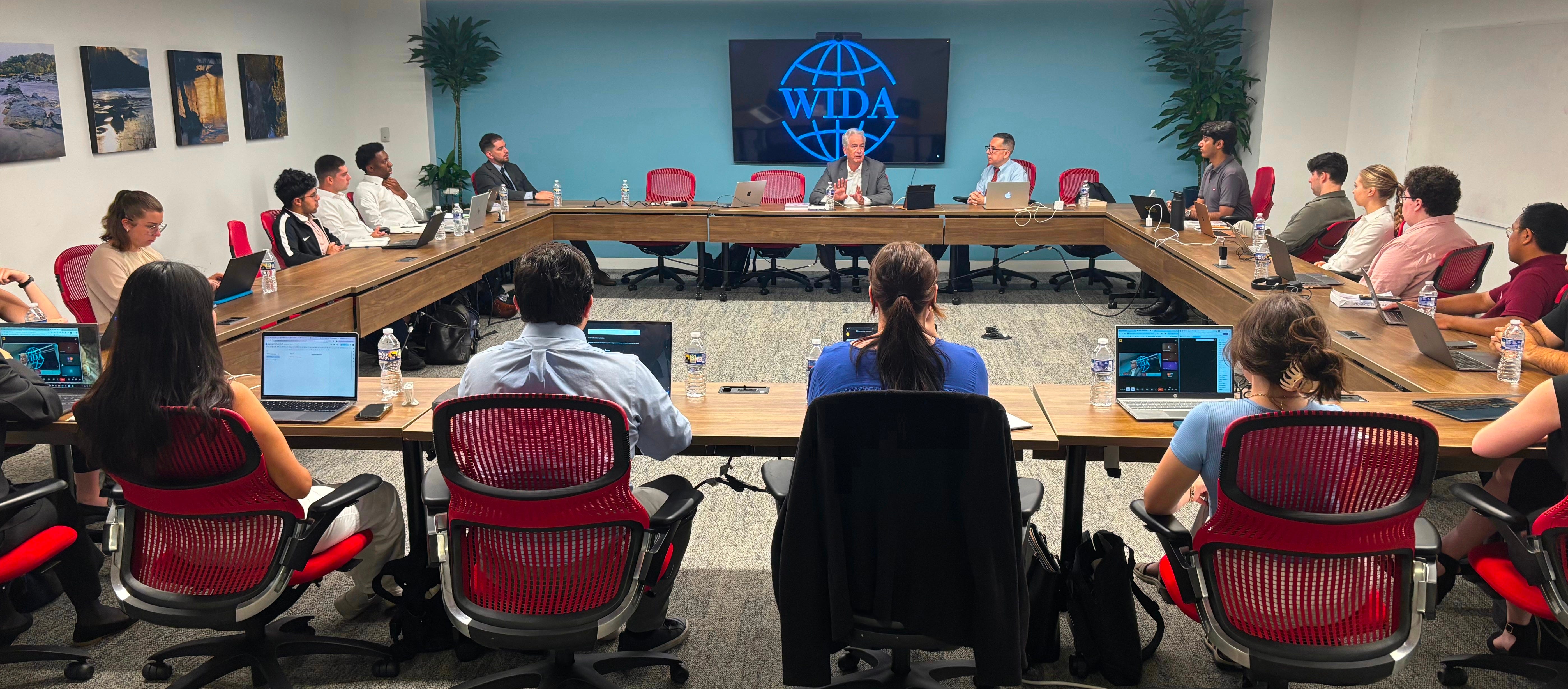
No such institution existed, so I decided to build one. I founded the Washington International Diplomatic Academy (WIDA) — still the world’s only independent practical diplomacy school — to help educate the next generation of diplomats.
Under the Trump administration, career diplomats have been sidelined or forced out. But that won’t last forever. When the pendulum swings back, the United States will need a deep bench of professionals ready to practice diplomacy with skill, discipline and judgment.
This is precisely what our Summer Diplomatic Academy is designed to do. Its ninth iteration will take place in Washington, D.C., on July 8-30, 2026, both in person and online. Trainees will work alongside career ambassadors with decades of experience. Half of the program consists of practical exercises, including simulations based on real events from the instructors’ own careers.
If you know a student or recent graduate who is serious about international affairs and wants to do more than study the world, encourage them to apply. We welcome applicants from the United States and other countries who are at least 18 years old and fluent in English. As an independent institution without external funding, we charge tuition, but our fees remain significantly lower than those of comparable professional programs in Washington — on other subjects, of course.
As a gesture to my readers, any applicants you refer will be considered for a limited number of partial $1,000 scholarships. They can indicate your referral on the application.
This is not simply about filling seats in a summer course. As you follow current events, like me, you’ve seen the cost of diplomatic incompetence. Diplomacy is not self-repairing. It improves only when capable people are trained to practice it well. Helping the right person find this opportunity may seem insignificant. I assure you, it’s quite the opposite.
I don’t expect Steve Witkoff, the Trump administration’s chief international envoy and a diplomacy amateur, to have any interest in this course. But it has become painfully clear that he would benefit from it.
Both The Diplomacy Notebook and The Diplomacy Podcast are free, but you can show your support by making a donation to help us continue to produce unique and timely content.
Nicholas Kralev is the founder and executive director of the Washington International Diplomatic Academy, and a former Financial Times and Washington Times correspondent. His books include “Diplomatic Tradecraft,” “America’s Other Army” and “Diplomats in the Trenches.”