
Calling Yourself a Diplomat Doesn't Make You One
Why can't politicians grasp the idiocy of appointing amateurs as high-profile envoys?

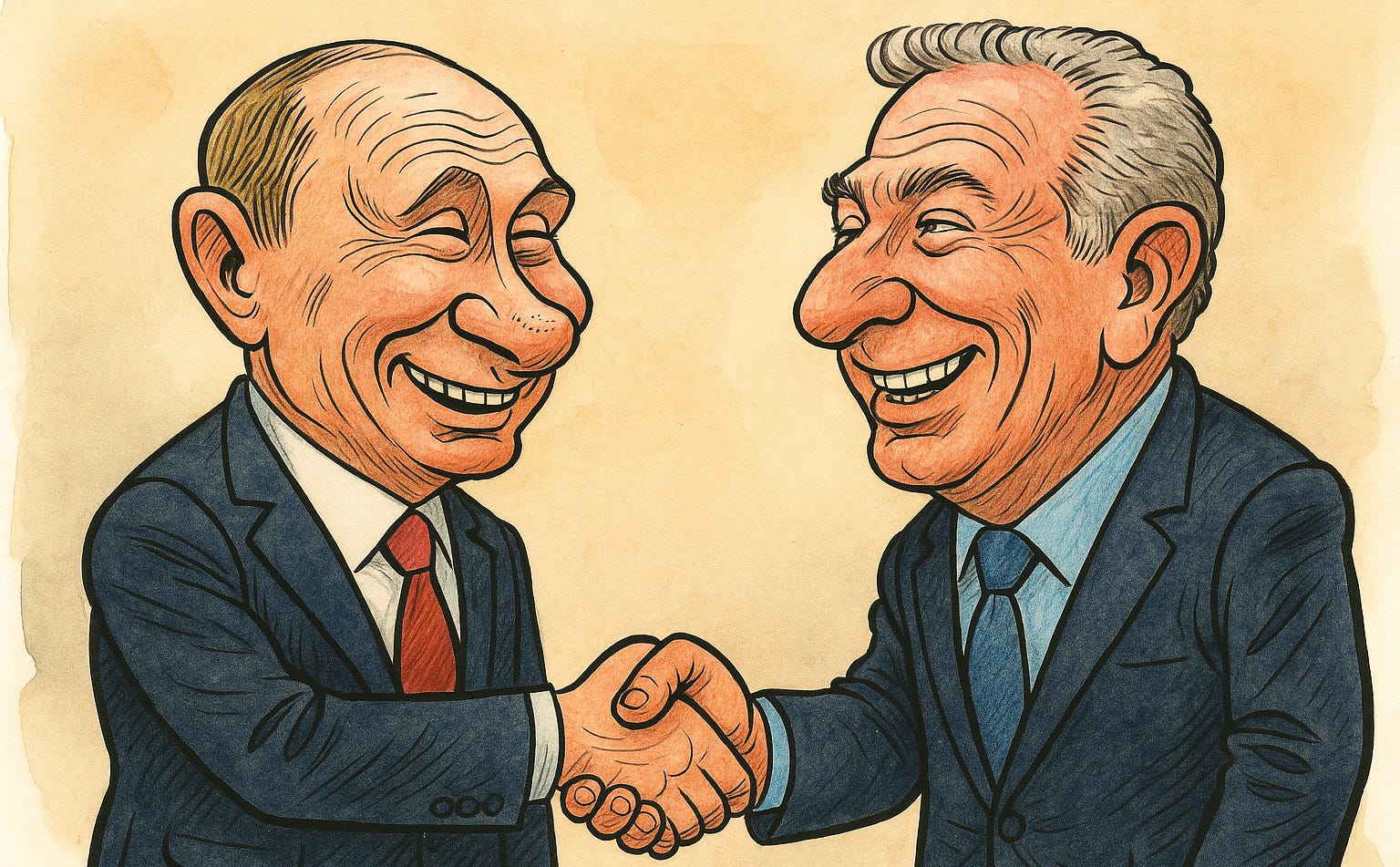
I feel like I’m going crazy. Sure, there are plenty of reasons to experience such a sensation these days. But my particular frustration has to do with something I believe should be obvious to anyone who knows anything about the world: Appointing amateurs as diplomats is a recipe for disaster.
Yet politicians of all stripes have long persisted with this reckless practice, which is currently on prominent display. Hint: Steve Witkoff, the man tasked with negotiating peace in Ukraine and the Middle East.
It’s not always clear that politically connected Americans who land high-ranking diplomatic posts despite lacking any meaningful qualifications end up as failures. The bar has been set so low that, for decades, such appointees have been deemed successful so long as they don’t cause a major scandal or embarrassment. That’s why most of them have been mediocre, a precious handful have objectively done very well, and several have been fired.
Whether they triumph or screw up, they rarely pass up the chance to use the title “ambassador” for the rest of their lives. The lesson is simple: If you raise enough money for a winning presidential candidate, you not only get to occupy an important national security post, but to call yourself a diplomat, even if you don’t know that there are no foreign embassies in New York.
As Ambassador Daniel Fried, a 40-year Foreign Service veteran, said on my podcast in June, Witkoff’s inability to do his job as the Trump administration’s special envoy for peace missions — a loftier title can scarcely be found — is glaringly obvious. The reason is not stupidity or a lack of intelligence. It’s that Witkoff, a lawyer and real-estate investor with close ties to the Trump family, doesn’t have the knowledge and experience to succeed.
There have been political appointees in similar positions in the past who have somewhat made up for their shortcomings by listening to advice from professional diplomats like Fried. Apparently, Witkoff isn’t one of those people. “I don’t know who is on Witkoff’s team, but judging by his public remarks, he either is unaware of the frequent times when the Russians are simply lying to him or distorting what they say — or doesn’t care,” Fried said.
After his fifth meeting with Russian President Vladimir Putin in Moscow last month, Witkoff told Trump that Putin was willing to withdraw from the Ukraine’s Zaporizhzhia and Kherson regions in exchange for Kyiv ceding Donetsk and Luhansk, as reported by Reuters. Encouraged by that unbelievably good news, Trump agreed to a summit with Putin in Alaska.
The news was, indeed, too good to be true. Putin had said no such thing, noting only that he wouldn’t demand that the West formally recognize Zaporizhzhia and Kherson as Russian. Many of us saw this coming months ago, when it became clear that Witkoff insisted on meeting with Putin alone, without an interpreter or notetaker, in defiance of longstanding practice.
According to U.S., Ukrainian and European officials quoted by Politico, Witkoff “has refused to consult with experts and allies, leaving him uninformed at times and unprepared at others.” As a result, “he has yet to translate his access to the Russian leader into any breakthroughs on Ukraine,” Politico pointed out.
Witkoff has been no more successful in his Middle East mediating efforts. I don’t mean to single him out, but only to stress how vital and consequential his job is. We need to go back three decades to find a somewhat comparable example of a special envoy tasked with ending a war. But the similarities between the two cases stop here.
In 1995, the envoy President Bill Clinton sent to negotiate peace in former Yugoslavia, Richard Holbrooke, had been a career diplomat, assistant secretary of state and ambassador to Germany. Holbrooke had plenty of shortcomings. He was difficult to manage, not necessarily pleasant to work for and had a huge ego. But he was an astute strategist and a brilliant negotiator — and he did end the war in Bosnia. So far, Witkoff has displayed neither of these skill sets.
Until 1883, under the so-called spoils system, military appointments as high as general were given out as political favors. That practice ended with the Pendleton Act, which created a merit-based system for federal jobs — well, it never fully ended. Even after the U.S. Foreign Service was created in 1924, diplomatic posts continued to be handed to political allies, family friends and, in recent decades, to the highest bidder. Political appointees can certainly add value to the federal bureaucracy, but only if they have the necessary professional qualifications.
Political appointments of generals may have ended, but unlike the military, diplomacy was never fully professionalized. Politicians in both the White House and Congress seem to think it’s so easy that any amateur can figure out how to do it. In my book “America’s Other Army,” I recount several horror stories about incompetent and embarrassing political ambassadors, along with a couple of examples of great ones, so I won’t rehash them here.
But think about this for a moment: You need a license to practice law, medicine — and yes, real estate. Yet any amateur can work in diplomacy, a profession vital to national security, economic prosperity and global stability. Can someone explain how that makes sense? Because I feel like I’m going crazy.
Both The Diplomacy Notebook and The Diplomacy Podcast are free, but you can show your support by making a donation to help us continue to produce unique and timely content.
Nicholas Kralev is the founder and executive director of the Washington International Diplomatic Academy, and a former Financial Times and Washington Times correspondent. His books include “Diplomatic Tradecraft,” “America’s Other Army” and “Diplomats in the Trenches.”
As a former diplomat (39 years), I could not agree more. An unwillingness to listen to anyone is a sure “red flag” for an aspiring non-career Special Envoy. A diplomat who doesn’t listen is doomed to failure.
Your insight is once again prescient! Thanks! Perhaps we will now see how the lack of diplomatic skill and awareness for some who assume the role negatively affects our national interests. Time for change.